Fidget Cube
A fidget cube provides several small tactile movements in one compact accessory. It may help players who seek movement or sensory input keep their hands occupied while listening, waiting or thinking.
About this accessory
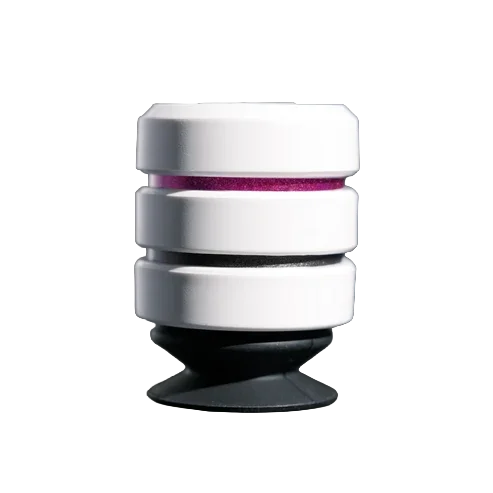
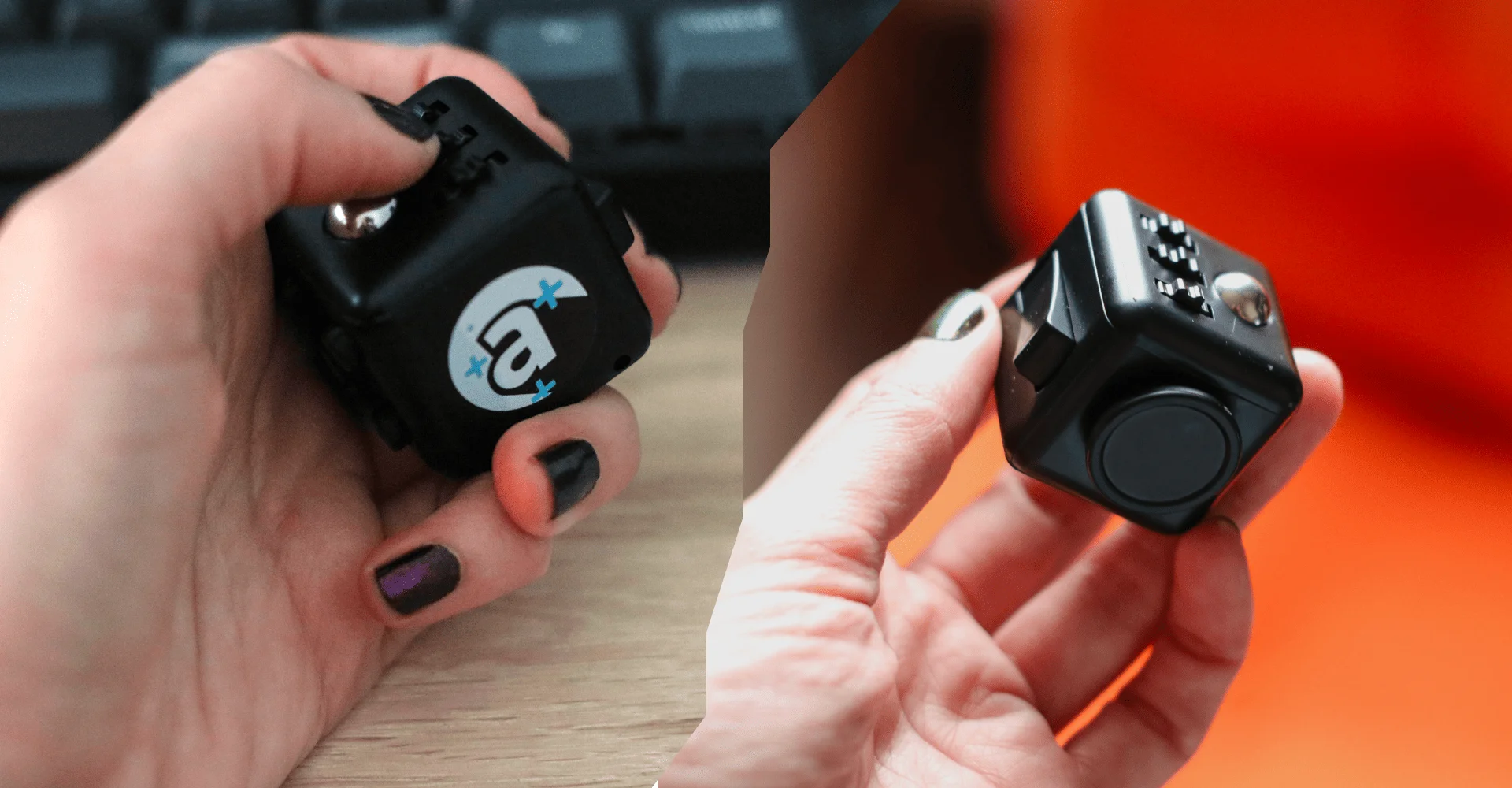
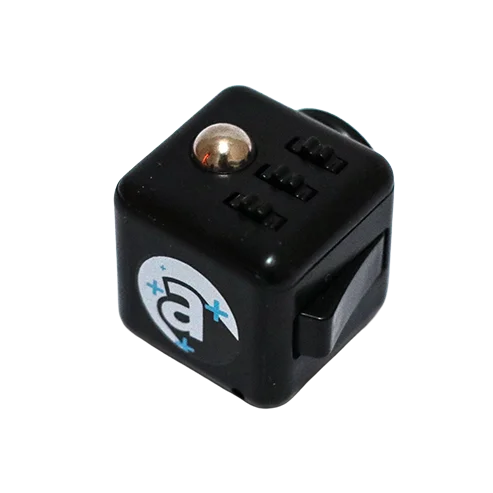
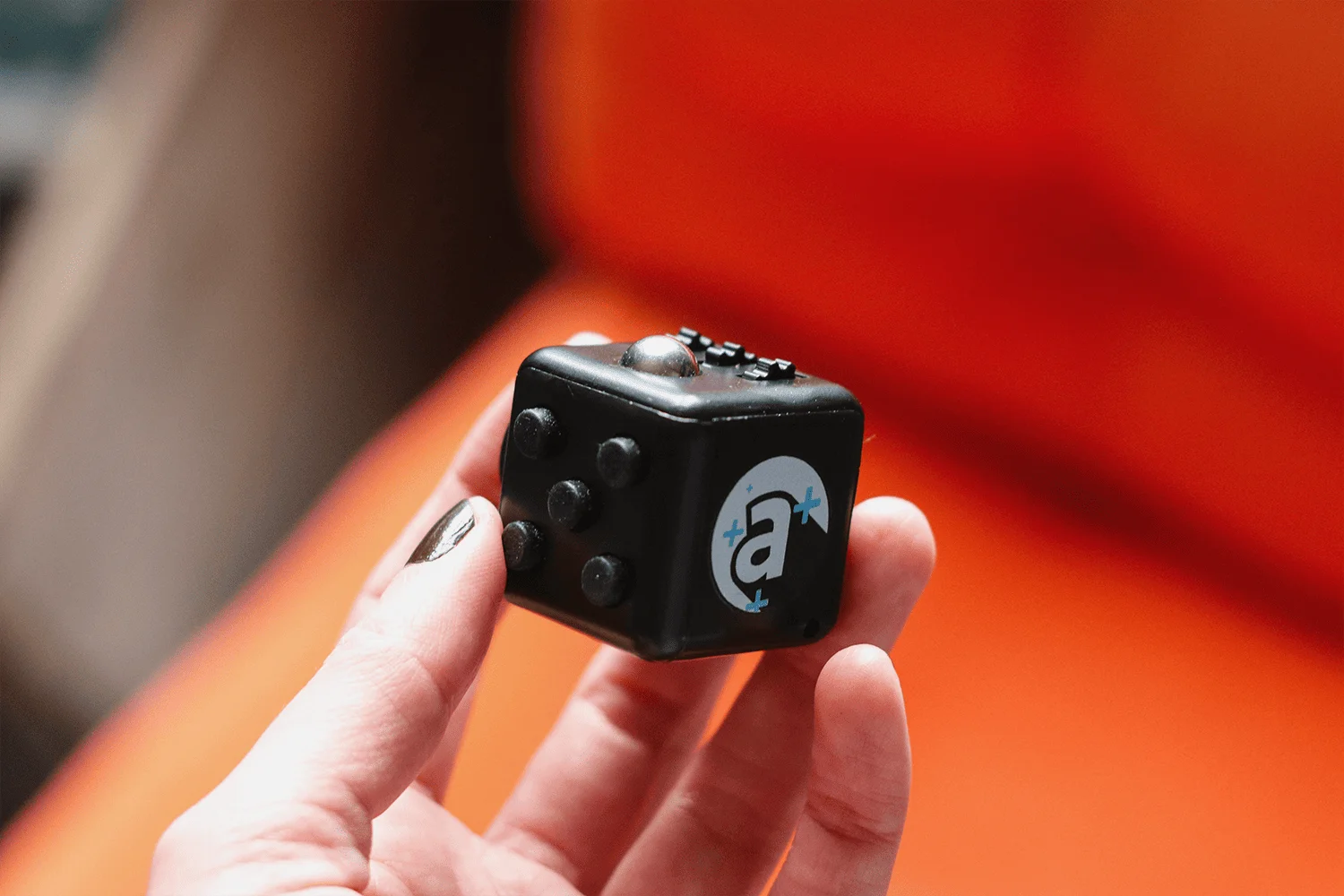
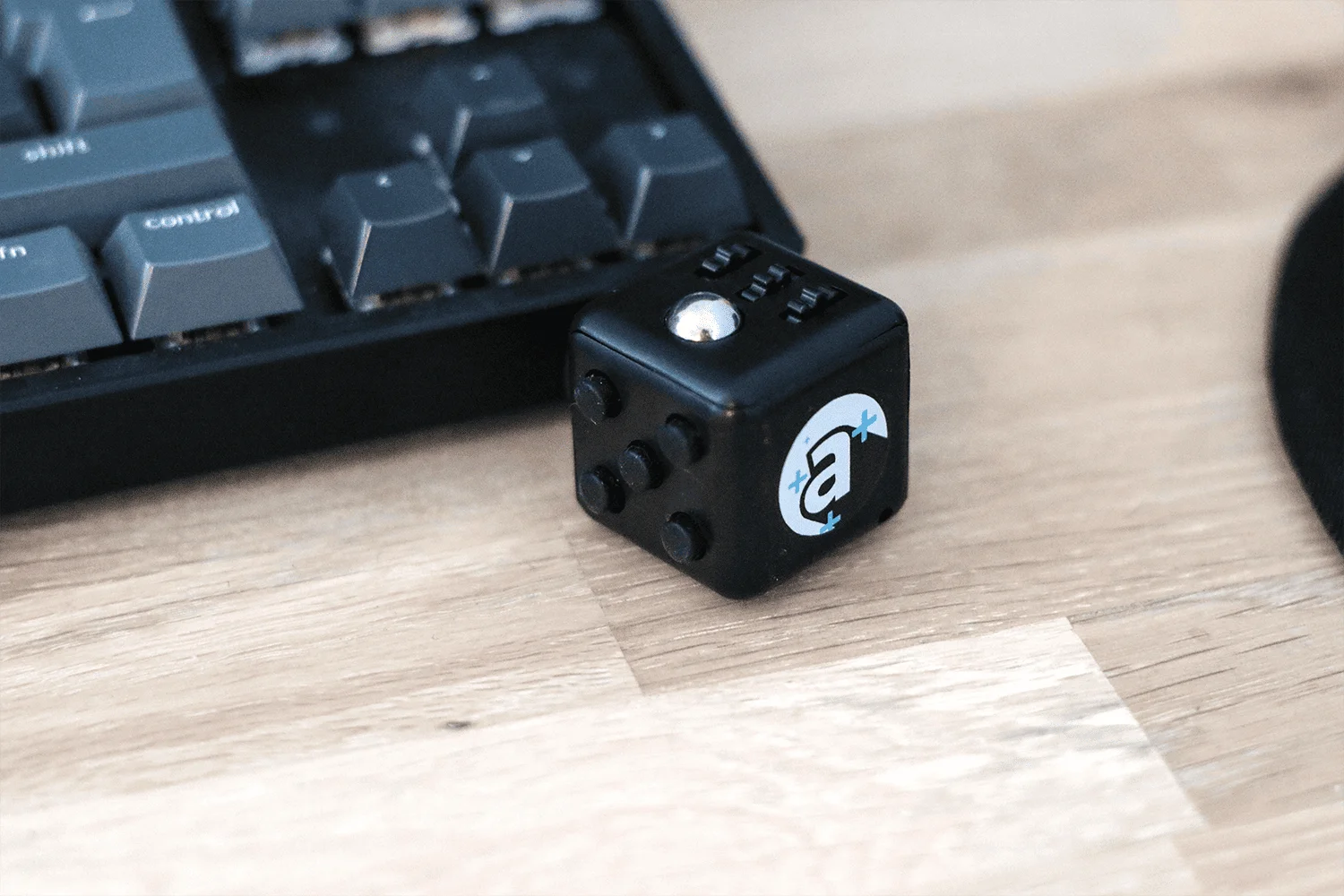
A fidget cube is a small handheld accessory with different controls and textures on each side. Depending on the model, these may include buttons, switches, rollers, dials, rotating surfaces or textured areas.
It can be used discreetly in one hand without changing the rules, components or setup of the game. A quiet model is preferable during demonstrations so that it does not distract other players.
Why use a fidget cube?
Some players find it easier to listen, wait or remain engaged when their hands are occupied. Repetitive tactile movement can provide a comfortable activity during explanations, periods of observation or time between turns.
A fidget cube can help players:
- Keep their hands occupied while listening
- Access discreet movement or tactile input
- Manage restlessness between turns
- Avoid repeatedly handling game components
- Remain at the table more comfortably
- Choose between different tactile actions
It may be particularly useful for players who experience:
- A need for movement or tactile stimulation
- Restlessness during explanations
- Difficulty waiting between turns
- Sensory regulation needs
- Anxiety in unfamiliar or busy environments
- Concentration that benefits from movement
It can also provide a comfortable way to keep the hands occupied for any player. A diagnosis is not required to use one.
About our recommendation
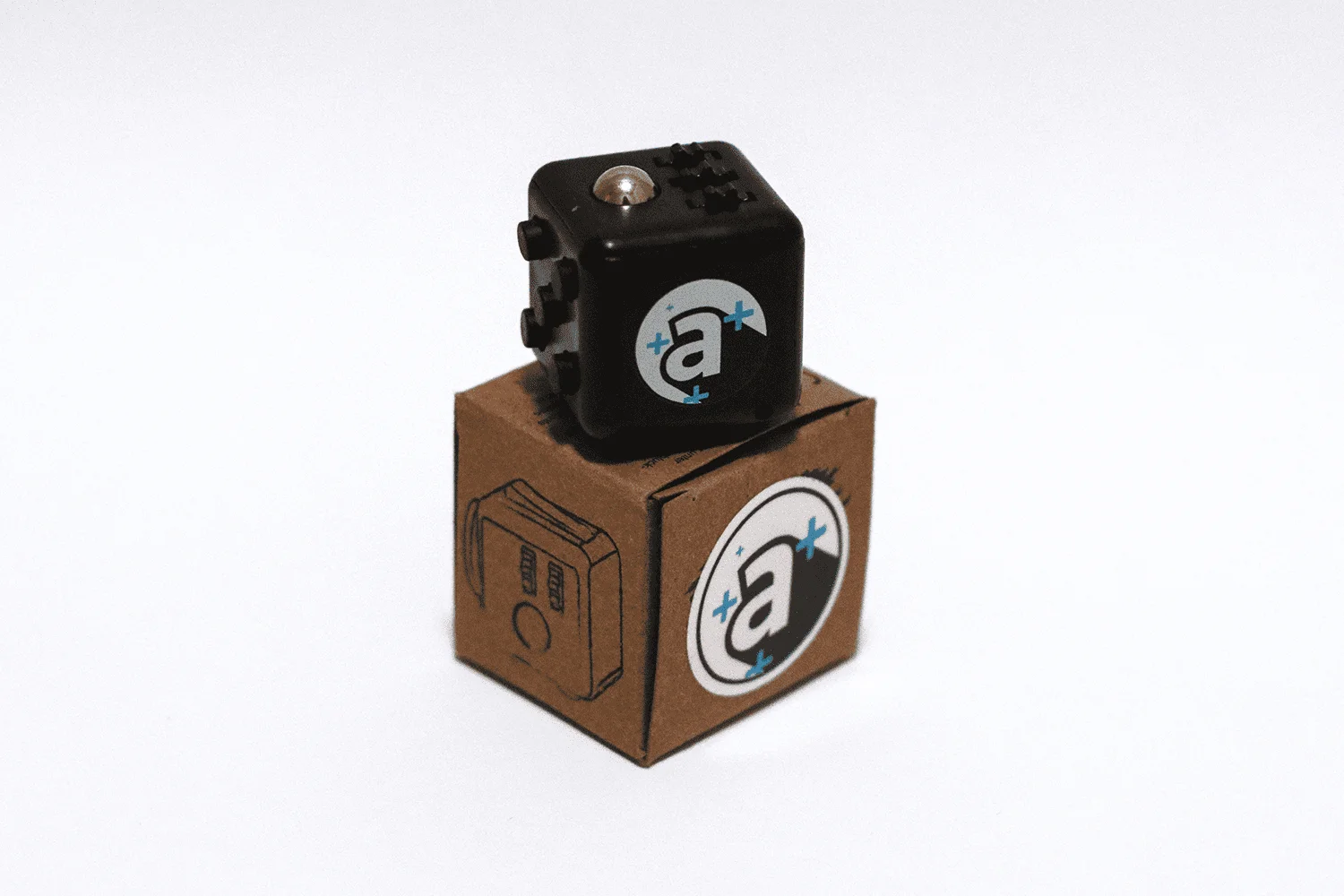
The asmodee access+ fidget cube brings together several quiet tactile actions in one compact accessory. While it is not available for sale, players looking for a similar solution can explore the Hop’Toys Fidget Cube, which also offers a range of sensory and motor actions.

This accessory works well with
Turn-based strategy games
A fidget cube can provide movement while players wait for their next turn.
Examples: Ticket to Ride, CATAN
Card and engine-building games
It can be used during periods of observation, planning or decision-making.
Examples: Splendor, 7 Wonders
It may be less suitable for dexterity, speed or reaction games when the player needs both hands to participate.
Tile-placement and pattern-building games
Players can use it between turns without interfering with the visible play area.
Examples: Azul, Harmonies
Longer or solo games
A fidget cube can provide tactile input during extended periods of concentration.
Examples: Behind, Heat: Pedal to the Metal