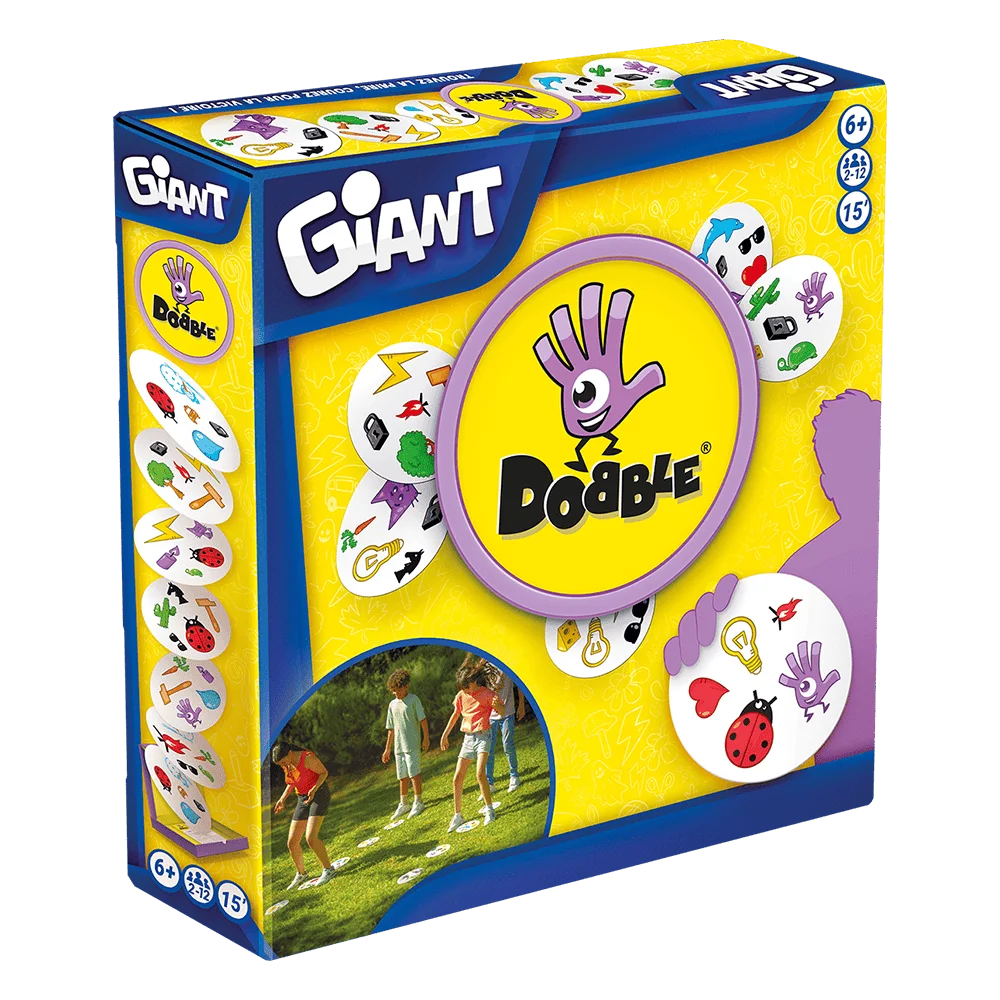

Dobble
Also known as Spot It!, Dobble engages selective attention, visual recognition, and inhibition control skills.
Presentation
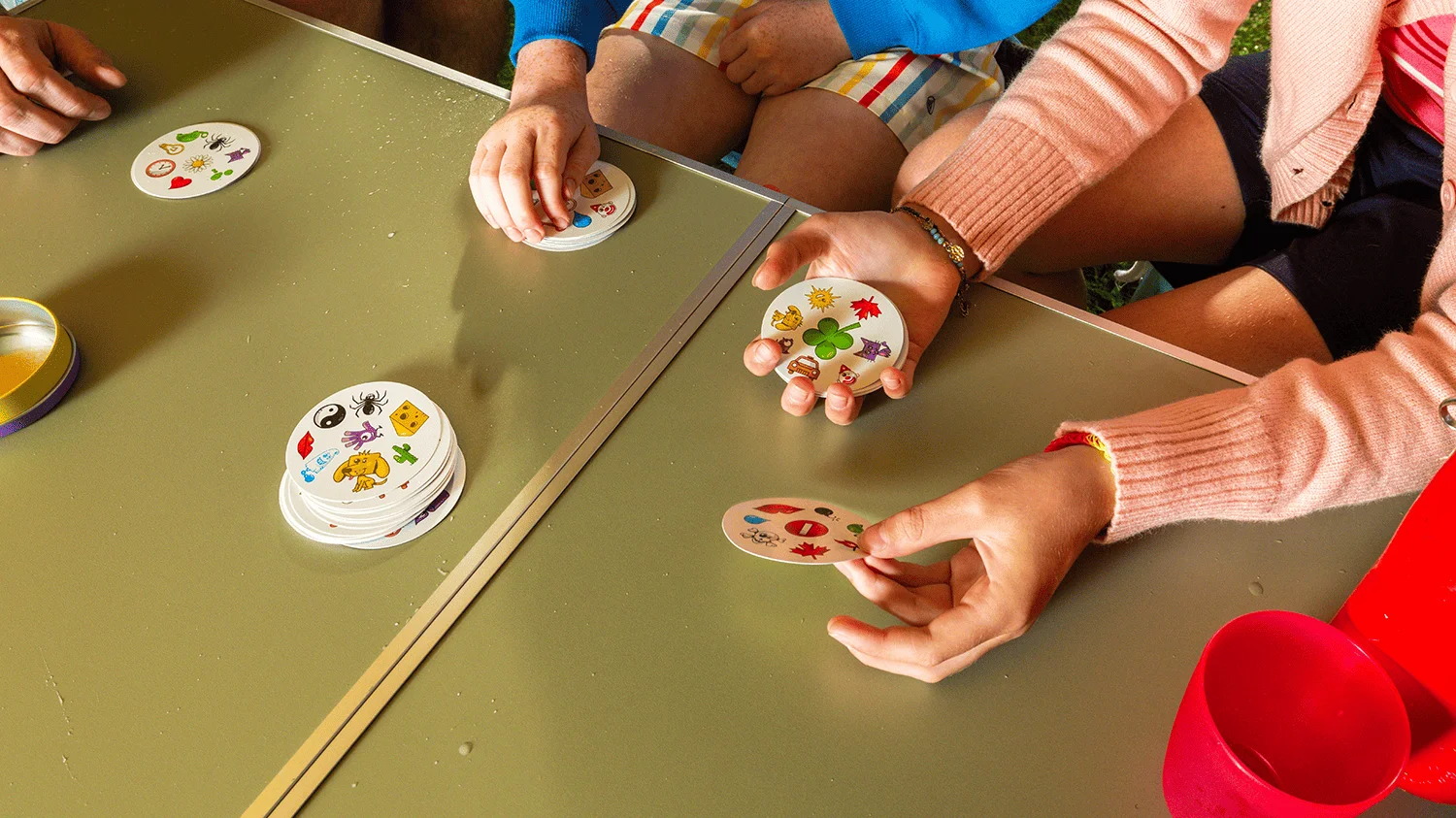
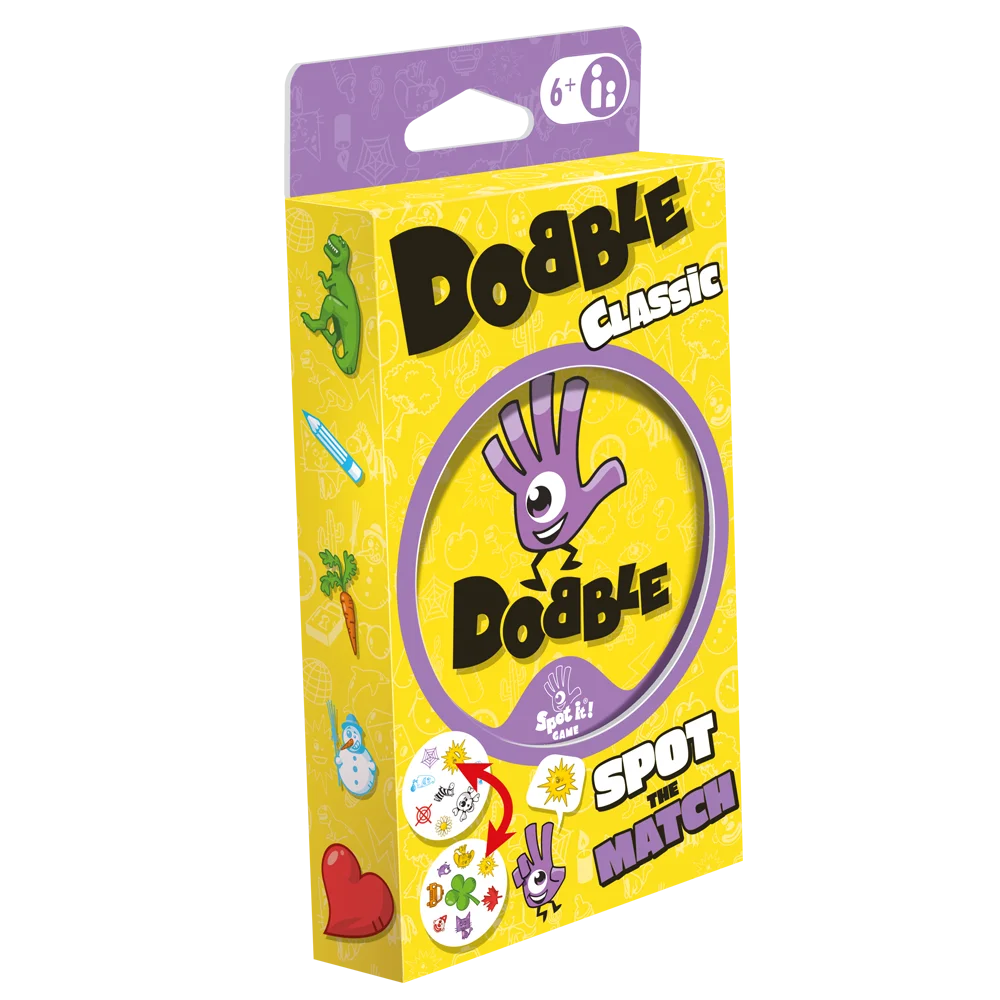
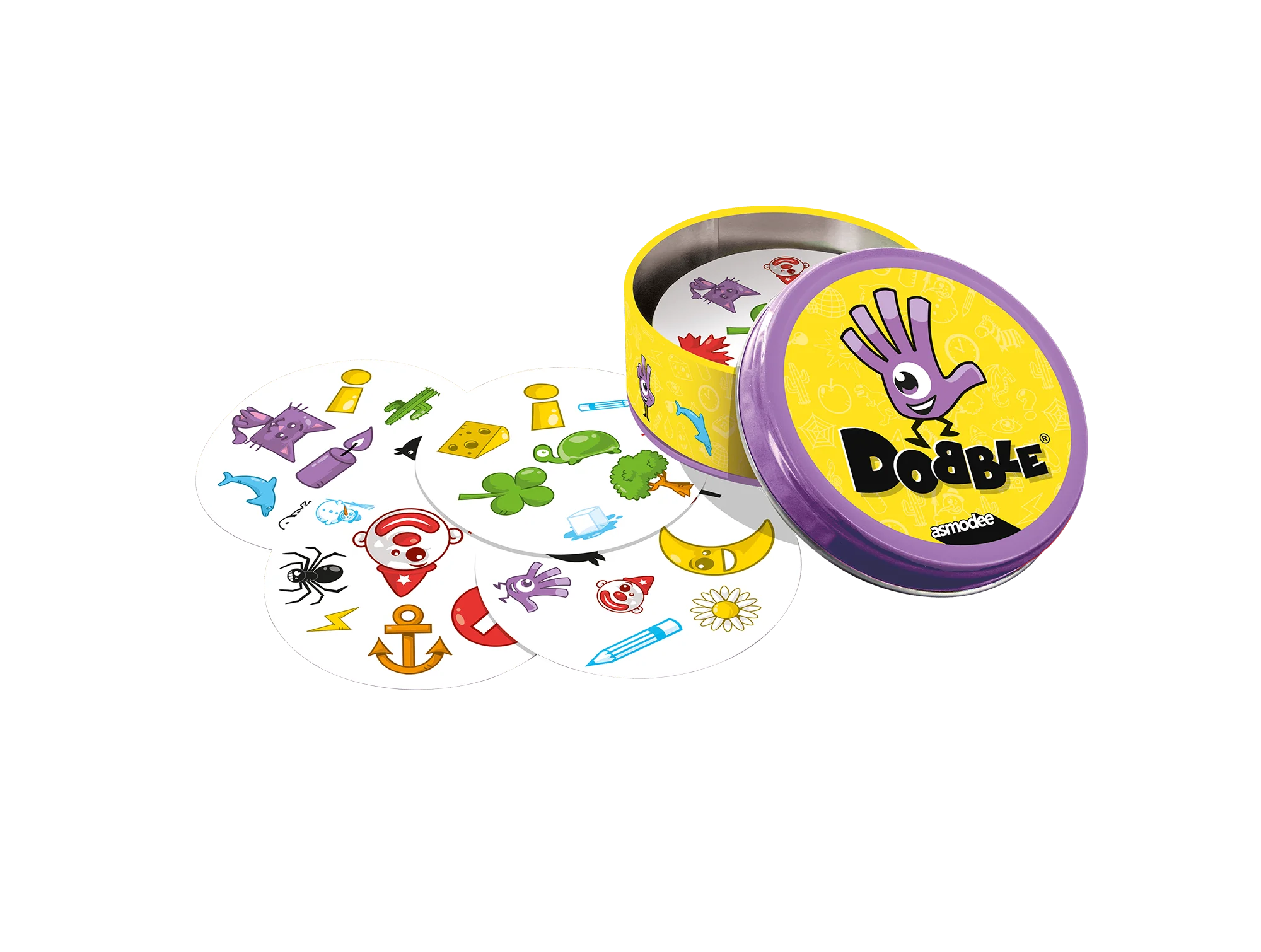
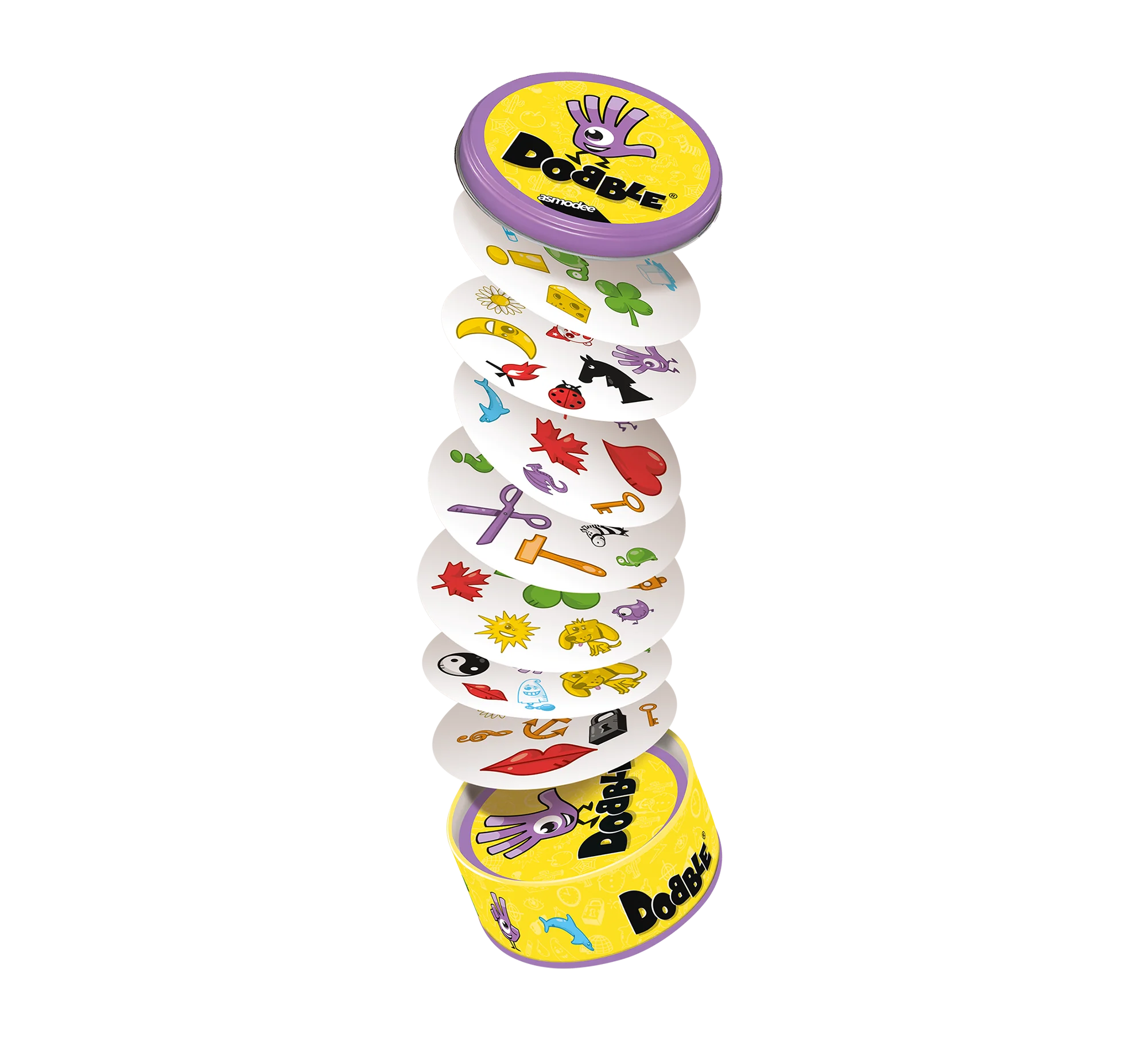
Dobble or Spot it! is a fast-paced observation game built around one simple principle: every two cards share one, and only one, matching symbol. The symbols are identical in shape and colour, although their size may differ. Spot the match, name it and react before the other players!
Solo mode: Not available in the standard rules / Available through our Game Guide
Cooperative mode: Available through our Game Guide
Game Guides
Coming soon
Discover our recommendations, facilitation tips and alternative ways to play – including solo and cooperative modes – to adjust visual complexity, speed and competition and help everyone enjoy Dobble!

Accessibility features
- No reading required: Dobble communicates entirely through visual symbols, removing the need to read text during play.
- Short playing sessions and simple rules: The core principle is quick to understand and easy to put into practice, while limiting the amount of information players need to remember.
Skills engaged
Dobble relies on rapid visual search: players must identify the single matching symbol between two cards while ignoring competing visual information. This helps engage:
- Selective attention: Players must quickly scan the cards and focus on relevant visual details to spot a shared symbol. Selective attention helps them filter out distracting information, guide their visual search and identify matching symbols.
- Alertness and inhibition control: Players must remain alert and respond quickly when they spot a matching symbol. Inhibition control helps them resist impulsive responses, avoid incorrect matches and maintain accuracy under time pressure.
- Visual recognition: Players must identify and distinguish symbols despite variations in their size, orientation or position. Visual recognition allows them to process visual features, recognize familiar shapes and identify the same symbol across different cards.


Scientific note
In the 2026 study The Card Game Dobble as a Diagnostic Tool, Šolcová and Děchtěrenko (2026) tested 50 participants across different Dobble scenarios. Their results showed that performance was associated with attention, cognitive flexibility (set-shifting) and performance intelligence, while factors such as symbol size and repetition influenced how quickly players found the match.
These findings provide scientific insight into the cognitive processes involved in Dobble, particularly focusing attention, efficiently searching visual information and adapting that search as the cards change.
This is what makes Dobble particularly suited to adaptable play. With the alternative rules and progressive difficulty levels available in our Game Guide, the challenge can be adjusted to different players while preserving the core Dobble experience: observing, searching and finding the matching symbol.

Learn how to play Dobble
Shop
Find where to buy Dobble